




I want to make this simple.
AI in healthcare is growing fast. And in home health agencies, it’s already being used—whether leadership approved it or not.
What most organizations don’t realize is this:
AI is not just a productivity tool. It is now part of your compliance and security environment.
That means:
- how it’s used
- what data goes into it
- and who has access
…all carry real risk under HIPAA and patient data protection standards.
I’ve seen good agencies drift into this without realizing it.
Not because they were careless. Because no one slowed down long enough to define the rules.
What Are the Risks of AI in Healthcare? (Quick Overview)
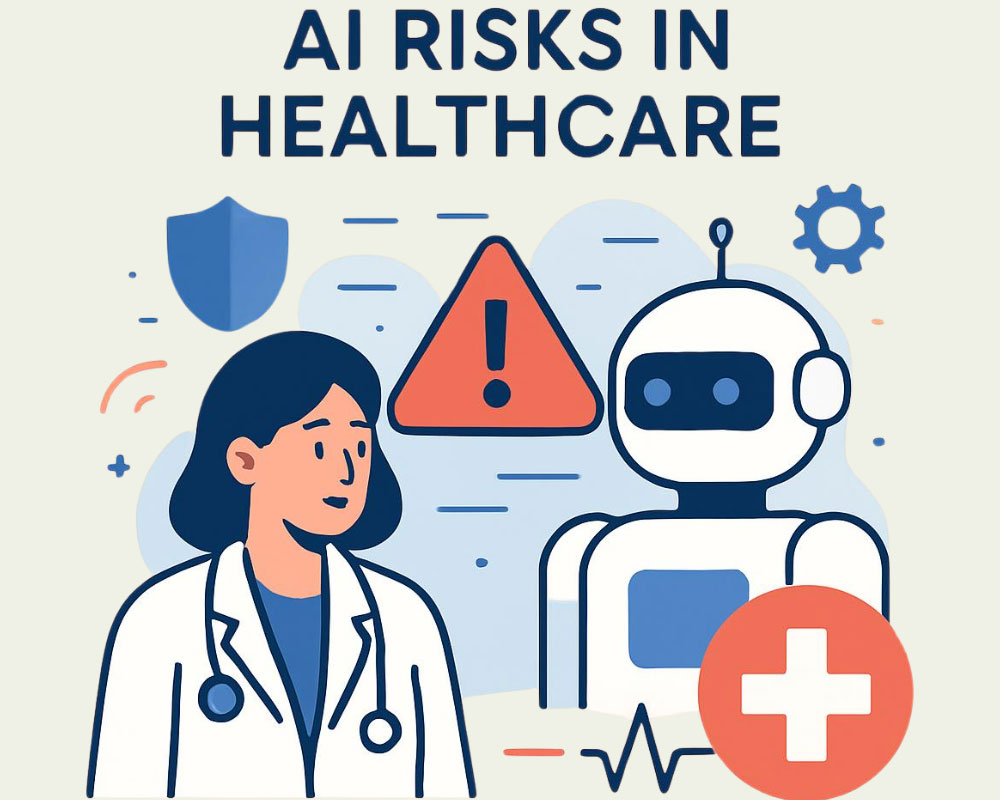
The biggest risks of AI in healthcare include:
- Patient data exposure (PHI leaks) through unsecured AI tools
- HIPAA compliance violations due to improper data handling
- Inaccurate or non-compliant documentation
- Uncontrolled staff usage (“shadow AI”)
- Investing in tools that don’t fit healthcare workflows
These risks don’t usually start as major incidents.
They start small. Quiet. Helpful.
And then they grow.
Why AI Feels Easy—but Isn’t in Healthcare
AI tools are simple to access.
Anyone on your team can:
- open a browser
- type a prompt
- get an answer in seconds
That’s what makes them powerful.
It’s also what makes them risky.
Because behind that simple interface are questions most agencies have not answered:
- Where is that data going?
- Is it being stored?
- Does it include patient information?
- Is it HIPAA compliant?
In healthcare, those are not technical questions.
They are compliance and operational questions.
And if they go unanswered, the risk does not stay theoretical.
1. AI Documentation Risks in Healthcare (CMS & Compliance Issues)
One of the first places AI shows up is documentation.
I’ve seen teams try to use AI for:
- visit summaries
- internal notes
- policy drafts
At first, it feels like a time-saver.
Then the friction starts.
The outputs:
- don’t meet CMS documentation standards
- miss clinical nuance
- require heavy editing
Now your team is doing two jobs:
- generating content
- correcting content
And in home health, documentation is not just paperwork.
It directly affects:
- billing timelines
- reimbursement
- audit exposure
“Almost correct” documentation is still a risk.
2. AI and HIPAA: The Real Risk of Patient Data Exposure
This is the most important section in this entire article.
Because this is where most agencies are already exposed.
A staff member uses AI to:
- clean up a note
- summarize patient information
- draft communication
They paste in information to save time.
But that information may include:
- patient identifiers
- visit details
- internal records
If that tool is not properly secured:
You may have just shared protected health information (PHI) outside your organization.
No alert. No obvious failure.
But from a HIPAA standpoint, that can still be considered unauthorized disclosure.
How 2026 HIPAA Updates Increase AI Risk
The upcoming HIPAA Security Rule updates (expected 2026) are moving in a clear direction:
- Stronger requirements for access controls (like MFA)
- More accountability for third-party tools and vendors
- Clear expectations for documented risk assessments
- Less tolerance for informal or undocumented processes
That means:
If AI is being used without defined policies, it becomes a compliance gap.
Not later.
Now.
3. AI Tools That Don’t Fit Healthcare Workflows
There are hundreds of AI tools available right now.
Most are built for general business use.
Healthcare is different.
You are working with:
- EMRs like Axxess, WellSky, MatrixCare
- Billing tied directly to reimbursement cycles
- Field clinicians documenting in real time
- Strict compliance requirements
So when AI is adopted without a plan, what I usually see is:
- tools that don’t integrate
- duplicate systems
- staff confusion
- wasted spend
And eventually:
“We tried AI. It didn’t help.”
The truth is:
It was never aligned with your operations to begin with.
4. Shadow AI: The Hidden Risk Inside Your Organization
AI adoption rarely starts at the leadership level.
It starts quietly.
- Someone in billing tries it
- A scheduler experiments
- A clinician hears about it
Before long, multiple tools are being used across your agency.
Without oversight.
This creates what’s called:
Shadow AI
And it raises questions most organizations are not ready to answer:
- Who is using AI right now?
- What data are they entering?
- Are we exposing PHI?
- Are we still compliant?
Most agencies don’t have bad intentions.
They just don’t have visibility.
How to Use AI Safely in Healthcare (Without Increasing Risk)
The agencies doing this well are not the most advanced.
They are the most intentional.
Here is what that looks like:
- Define Safe Use Cases
Start with:
- admin tasks
- non-PHI workflows
Avoid:
- anything involving patient-identifiable data
- Set Clear AI Usage Policies
Your team should know:
- what tools are approved
- what data is allowed
- what is strictly prohibited
Simple rules prevent complex problems.
- Protect Patient Data First
This means:
- no PHI in unapproved tools
- secure environments only
- clear accountability
- Align AI with HIPAA and Security Standards
Treat AI like any other system:
- risk assessed
- monitored
- documented
- Know What’s Already Happening
Ask one simple question:
“Where is AI already being used in our organization?”
The answer is usually more than expected.
A Simple Reality Most Leaders Feel (But Don’t Say Out Loud)
I hear this often:
“I just want one week without something breaking.”
AI is not the problem.
But unmanaged AI becomes one more thing that can break quietly.
And in healthcare:
Small risks rarely stay small.
Where This Connects to Your IT and Security Strategy
This is where most agencies start to feel stuck.
Because this isn’t just about AI.
It’s about:
- visibility
- control
- compliance
- and support
If your current IT approach is:
- reactive
- fragmented
- or unclear on security
Then AI will expose those gaps faster.
This is why many home health agencies are starting to:
- review their cybersecurity posture
- conduct HIPAA risk assessments
- and move toward more structured IT support
Not for technology.
For certainty.
If You Want a Safe Starting Point
You don’t need to overhaul everything.
Start here:
- Identify where AI is being used
- Check if any PHI is involved
- Set 3–5 clear rules for staff
- Review this with your IT or security partner
If you don’t have that level of support today, that’s usually the first gap to address.
Final Thought
I know you are not looking for more tools.
You are looking for:
- stability
- compliance confidence
- and fewer surprises
AI can help.
But only when it is managed with the same care as everything else in your organization.
Because at the end of the day:
This is not about technology. It is about protecting patient care, your team, and what you’ve built.
FAQ: AI, HIPAA, and Healthcare Compliance
Can AI tools cause HIPAA violations?
Yes. If protected health information (PHI) is entered into unsecured or unapproved AI tools, it can result in unauthorized data disclosure and a HIPAA violation.
Is AI HIPAA compliant?
AI tools are not automatically HIPAA compliant. Compliance depends on how the tool is configured, how data is handled, and whether proper safeguards and agreements are in place.
What are the biggest AI risks in healthcare?
The biggest risks include: PHI exposure, compliance violations, inaccurate documentation, lack of governance, and uncontrolled staff usage.
How should home health agencies use AI safely?
Agencies should: limit AI use to approved tasks, avoid entering PHI into unsecured tools, create clear usage policies, and align AI with HIPAA security practices.
What do the 2026 HIPAA updates mean for AI?
They are expected to increase accountability around: data handling, third-party tools, risk assessments, and security controls. This means AI use must be intentional, documented, and governed.
